


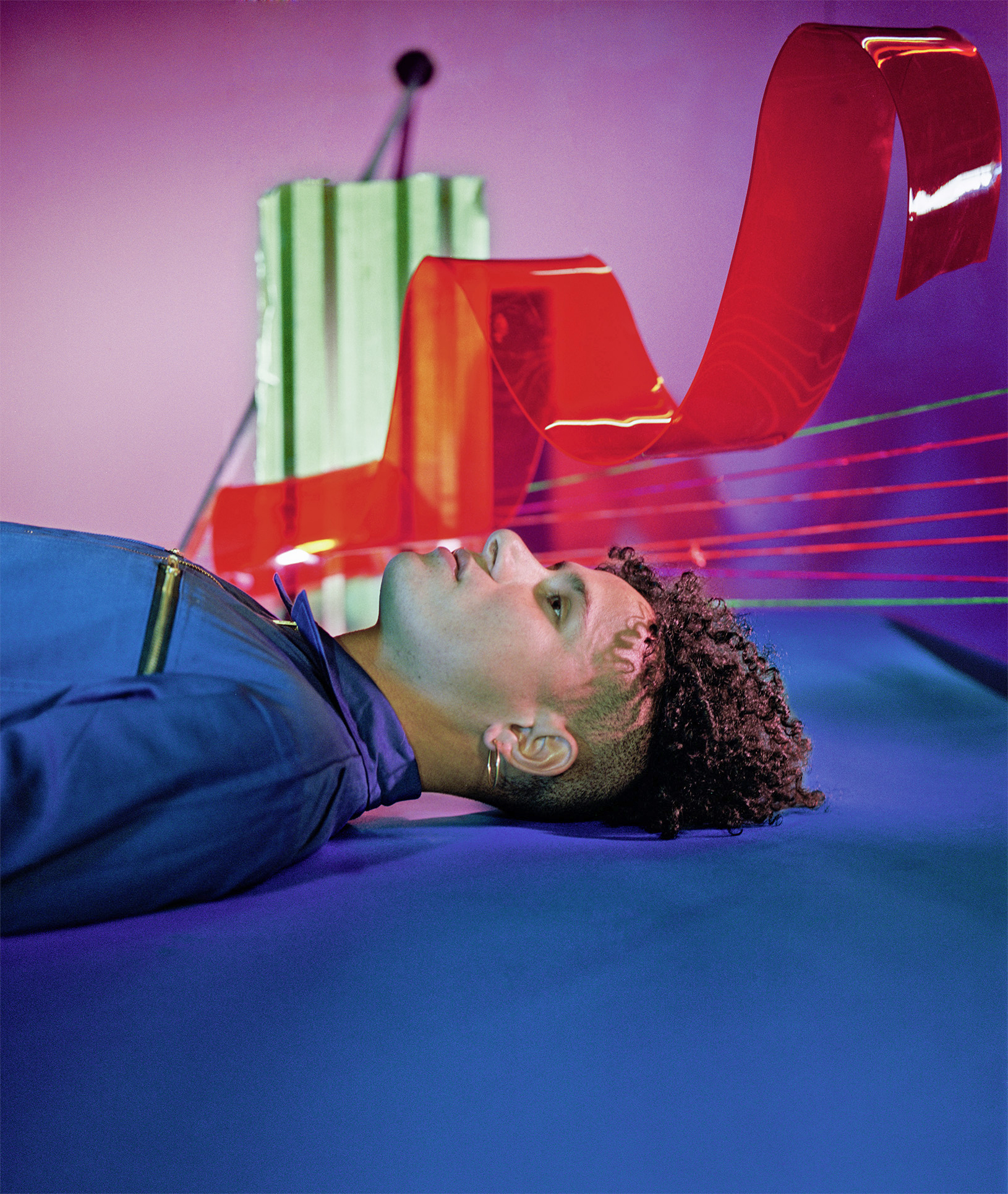
In Into the Chronosphere, Sisi Bo’wale and his team weave together performance, music, poetry and psychedelic imagery into a tongue-in-cheek, queer, Afrofuturist collage. At its heart are questions about the meaning of time and the protagonists’ attempt to free it from its colonial linearity, driven by the logic of exploitation.
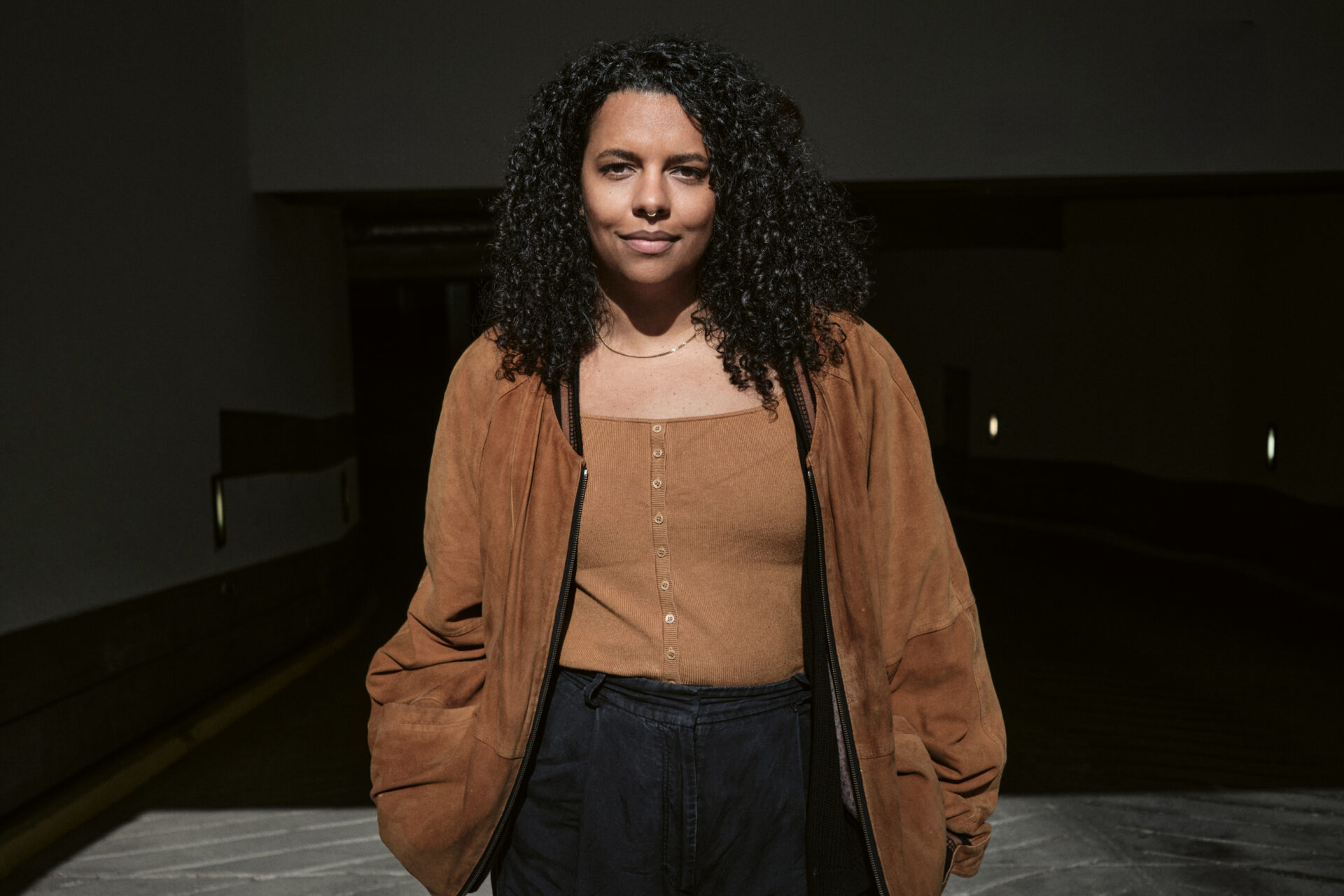
In her third book, Alice Hasters examines the evolution of the term “victim” and the resulting shift in public discourse. Increasingly, the word “victim” no longer refers to people who have suffered injustice, but to those who are seen as disrupting harmony, being overly sensitive, bringing others down or trying to assert superiority over them. Hardness towards others is increasingly regarded as desirable. And while victims are held to impossibly high standards, powerful alliances rooted in patriarchal complicity are making our world a worse place.
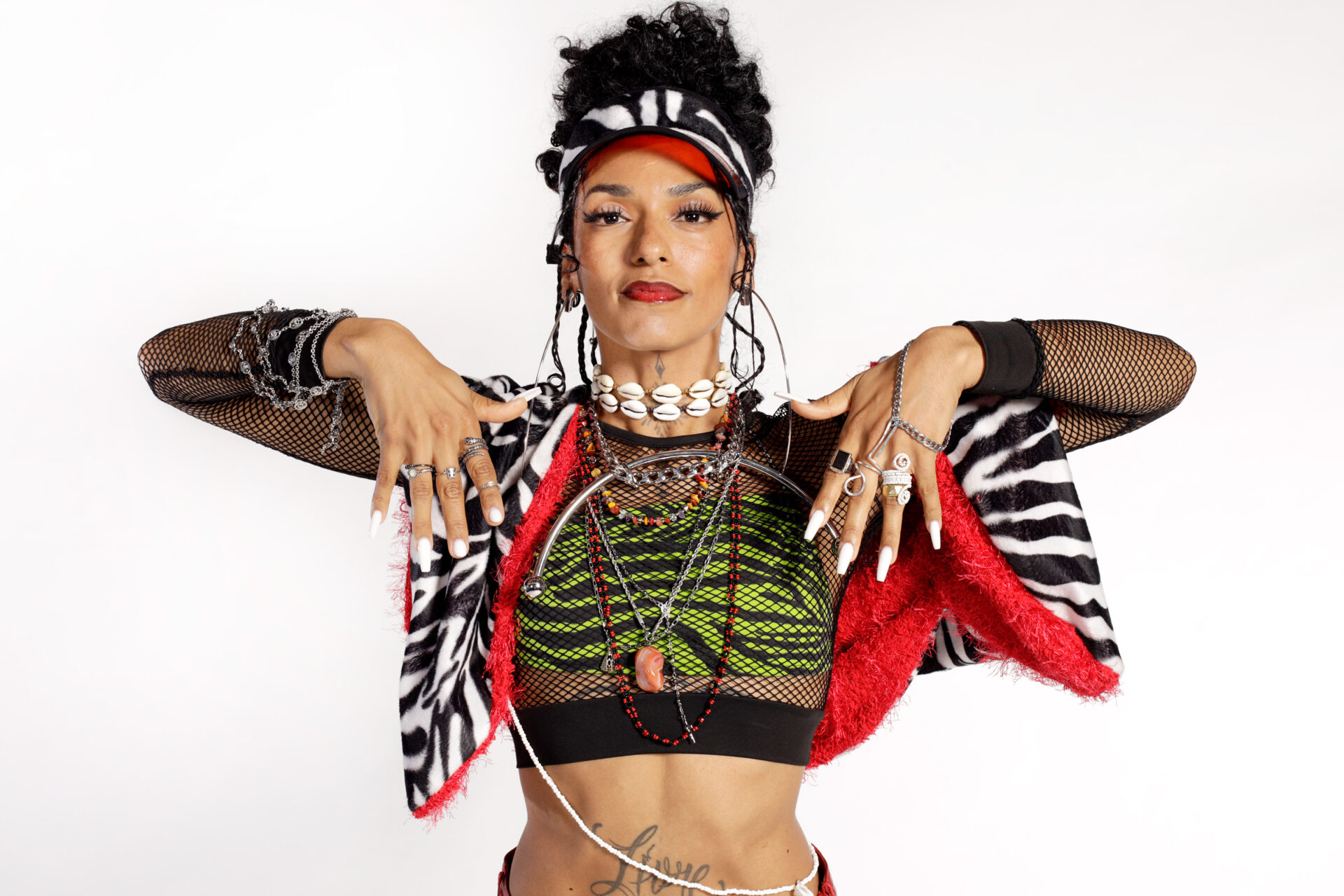
The body is the medium for entering ever new worlds. The body is suppressed, the body is free. Natasha Vergilio’s art consists of using the centrifugal force of her own body movement to push forward into new spaces, for herself and for others – now she is showing Gira, her portrait performance at Ballhaus Naunynstraße!

Based on his experience of growing up in Berlin in the 1980s and 90s, dancer and choreographer Raphael Moussa Hillebrand attempts to shape his own life experience so that the next generation and his own child can pick up on it.

In Arrival of the Village, documentary choreographer Magda Korsinsky and her team set out in search of transformed relationships — because the old model of the heteronormative nuclear family produces roles that often isolate, exhaust or create dependency. Recognition, desire, self-determination and equality fall by the wayside. And how can one be a role model when so much feels wrong? How can we expand our notions of family and live out collective care, shared responsibility and mutual empowerment?

Portrait performances are risky. For the theatre and for the artists. This applies to professionals as well. And Maya Alban-Zapata is a professional: Paris bequeathed her a dramatic stage, and Berlin gave her a big mouth.

The main character in Flight of the Canaries is confronted with all the madness that is our daily life. Torn between invisibility and hyper-visibility, they, as a Black individual, feel pressured into masculinity and high performance: to be special and extraordinary. For many avant-garde strides, for styles and attitudes, they receive admiration, yet are simultaneously threatened with dispossession and disenfranchisement.

The choreographer and dancer Jao Moon explores the possibility of transforming his own body. This experience changes his perspective on social border regimes - he is able to burst, overcome, change or move them. In reference to the Colombian champeta ‒ the music of the periphery of Cartagena de Indias ‒ working on one’s own body turns into a practice of resistance that enables to question the predominant social order.
In Memory of Dislocation Jao Moon traverses spaces of social segregation in Colombia, of heteronormativity, precariousness, dance discipline, queerness and the Berlin club culture. The boundaries of social spaces convert into a physical challenge at the end of which stands the utopian question whether his body can become the space in which all these boundaries dissolve.